Hopeless Between Revolutions
This piece grew out of an invitation from Samizdat Film and the Scottish Documentary Institute to speak alongside Dr. Zahra Khosroshahi about Vlad Petri's documentary Between Revolutions. The documentary creatively imagines the friendship between Zahra from Iran and Maria from Romania, whose friendship began while they studied medicine in Bucharest. Archival footage is animated with poignant fictional correspondence that Romanian poet and author Lavinia Braniște imagined to happen between Maria and Zahra, whose lives are shaped by revolutions. Lavinia Braniște draws on the writings of two renowned poets and writers: Romania’s Nina Cassin and Iran’s Forough Farrokhzad to narrate what Vlad Petri called the transformation of hopes into ‘disillusion[ment] most of the time’. Indeed, Between Revolutions depicts the past as being in constant dialogue with the present, as Christopher Vourlias writes for Variety, and makes revisiting the documentary timely while Iranians are struggling with the US crippling sanctions, the war on Iran, and the bloody suppression and killing of protestors in December 2025.
I want to place the documentary in its historical context to open a critical perspective and a re-viewing of the documentary by asking what brought Zahra, as a figurative example of Iranian students, to Romania and why Iranian students chose Bucharest to study. These questions invite critical reflection on how hopelessness and despair arise when people are pushed around by the machinery of the military-industrial complex, and how hope does not turn into disillusionment because of revolutions or radical change in a country, whether Romania or Iran. Then I move on from the historical context to the Islamophobic notes of the documentary that are juxtaposed with the documentary’s imperialist and patriarchal tropes through a poetic merger of sounds and images. Between Revolutions’ Islamophobia and celebration of imperialism and concealing patriarchy in poetic dialogues is not mere ignorance and good intentions gone wrong. I think they emerge from malicious intent that brackets history out of images and perpetuates an ahistorical visual narrative of Iran and Iranians; an ahistorical visual narrative that aligns with White imperial feminism that wages war in the name of the liberation of women* in the Global South.
The Zionist pipe dream
The Zionist pipe dream
Between Revolution is silent on a history that entangles Iran and Iranians within the larger history of antisemitism and Israel as the settler colonialism project. I will connect different parts of European history to show how Zahra and Maria’s friendship is situated in bloody histories of imperialism and colonialism that crush hope, and that revolutions do not transform hope into disillusionment, as Vlad Petri would have it. Despite intensive efforts by Communist Romania in Iran throughout the 1950s, the ruling Pahlavi monarchy never took Bucharest seriously. However, the last Pahlavi monarch changed course, established a high-level relationship with Romania, and opened an Iranian embassy in Bucharest. This shift led to an exchange of university students, and eventually 45 Iranian students studied in Romania in the 1970s. In June 1966, Iran's last monarch met Nicolae Ceaușescu, Romania’s communist leader, and said, ‘If small powers got along, the tasks of superpowers would be even easier… this would give an opportunity to all countries to live peacefully,’ which Nicolae Ceaușescu affirmed at the end of the meeting by stating, ‘only peaceful, collaborative relations can help solve the problem’. Student scholarship and student exchange were part of this policy of ‘small powers getting along’. A few months later, Nicolae Ceaușescu made it clear to the Iranian ambassador by sympathizing with the monarch’s interest in a stable market to sell crude oil, which was transported to Romania via the Israeli pipeline Eilat-Ashkelon, jointly built by Iran and Israel. The question is: why was Romania, the second-largest oil producer throughout WWII and later on, interested in Iranian crude oil?
The very idea of a pipeline that would connect Eilat, the southernmost city of Israel and just at the tip of the Red Sea, to the Mediterranean Sea, which would receive oil from the Persian Gulf, and would be an alternative to the Suez Canal, began in 1950. Israel wanted access to oil without dealing with Arab states and the USSR that supported Palestinians. However, from 1950 to 1968, almost the entire Western bloc that supported Israel dismissed its plan as a pipe dream. British companies, including Tri-Continental of Baron Edmond de Rothschild, who identified as a Zionist, British Petroleum, Shell, the British administration, including Prime Minister Harold Wilson, known for his sympathy with Israel, and the US administration and US investors such as Rockefeller, dismissed the pipeline as politically volatile. Eventually, the FRG (Federal Republic of Germany, or West Germany) credited $22 million; pipe-laying began in June 1968, was completed in a year, and the first stream of oil flowed in December 1969. The Western bloc’s refusal and the lack of support for Israel’s pipe dream were to the extent that the Iranian monarch threatened to pull out of the deal and tasked Israel with securing buyers. Israel convinced Romania, and Romania became the biggest importer of Iranian oil through the pipeline. Uri Bialer, the Israeli diplomatic historian, suggests that Israel promised transportation through the pipeline would always be cheaper than through the Suez Canal, and Eitay Mack, an Israeli lawyer and human rights activist, suggests Nicolae Ceaușescu appeased Israel because he believed Israel and Jewish financiers controlled the world. However, Radu Ioanid, Ambassador of Romania to Israel and Holocaust Historian, explains in The Ransom of the Jews a larger deal with Israel and Romania that goes as far back as the 1940s. In the late 1940s, Romania allowed nearly 100,000 Jewish peoples to leave for Israel in exchange for cash and oil drilling equipment, but it banned Jewish migration in 1952 after US-Romanian trade was restricted. The migration of Romanian Jewish peoples to Israel to settle them in Palestine was the top priority for Tel Aviv, and it used all possible mechanisms, including platforming Romania in the Middle East peace negotiations and trade, to make Jewish migration possible and keep it silent to avoid international controversies. Ioanid writes that Golda Meir, the Israeli prime minister between 1969 and 1974, told the Romanian authorities, ‘let Jews go and we will help you’. Nicolae Ceaușescu became so close to Israel that he played an essential role in the Camp David Accords and was shocked that he did not receive the Nobel Peace Prize afterward. However, Nicolae Ceaușescu turned completely after the Islamic Revolution of 1979, and when the pipeline dried up, he became a vocal supporter of the PLO, but he kept charging Israel for each Jewish person settling in Palestine till 1989, when he was executed. Romania under Nicolae Ceaușescu became the biggest importer of Iranian oil via the pipeline Eilat-Ashkelon as part of a larger Israel-Romania historical deal that entailed Jewish migration for colonization of Palestine. A deal neither Maria nor Zahra knew about, yet one that shaped their lives, friendship, and political subjectivities.
Silencing of Histories Between Revolutions
Silencing of Histories Between Revolutions
Once the histories that motivate and shape migration and mobilities are silenced, other narratives become believable. My first example is minute 21, where Maria writes to Zahra about being anxious about the news of the establishment of the Islamic Republic and the arrests of intellectuals and those who opposed Islamist ideologies, which reminds her of the brutal black coat in Romania that suppressed the opposition. The black coat refers to the Iron Guard (Garda de Fier), which was a far-right, “revolutionary,” and fascist paramilitary organization. As she speaks of black coats in Romania, the footage of Muslim Iranian men going to prayer, a Muslim cleric, and Muslim volunteer combatants who resisted the invasion of Iraq in 1981 praying runs in the background. Dutch Iranian scholars Shahin Nasiri and Leila Faghfouri Azar have shown the atrocities of those years, and the Islamic Republic of Iran massacring its opposition is undeniable, but why do images of Islamic rituals, Muslim men, and prayers become the background to the visual expression of Romanian fascism? Why does footage of Muslim men dressed in black in winter on their way to prayers and volunteer combatants resisting Iraq become the recollection of antisemitic and far-right fascism? There is not a single sign or symbol in the footage that suggests these men are to be assumed as the agents of massacre, or as Islamists or as agents of the Islamic Republic of Iran. The deep-seated Islamophobia has worked through what Berlinale, in its introduction of the documentary, called ‘incredible and stunningly edited archival footage’, and of course, the emphasis remains on ‘edited’. Indeed, the enchantment of edited footage, poignant prose, and a soft voice-over that emanates hopelessness tries to reach the audience, jostle their fear of Muslims, and reimagine the past.
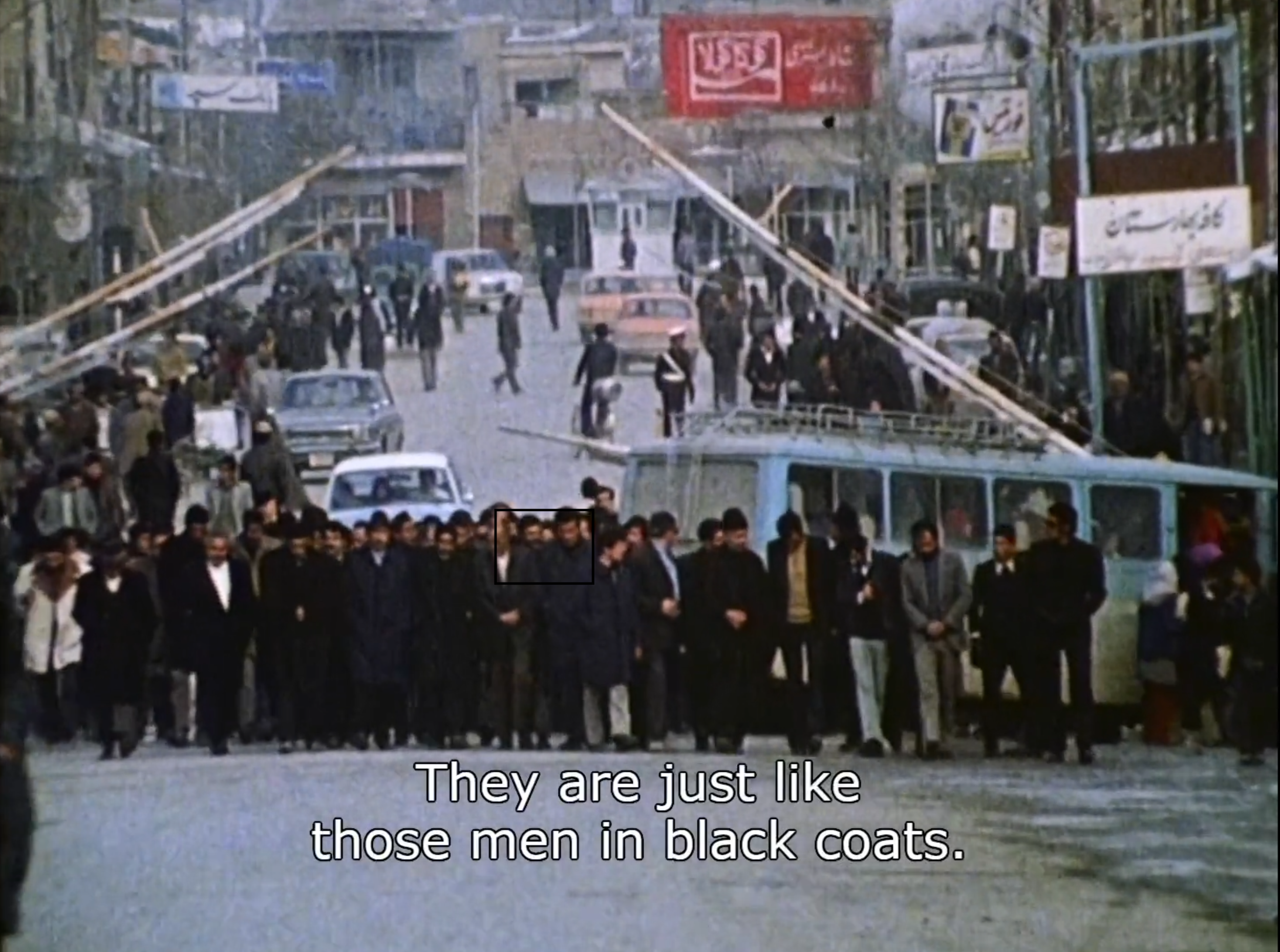
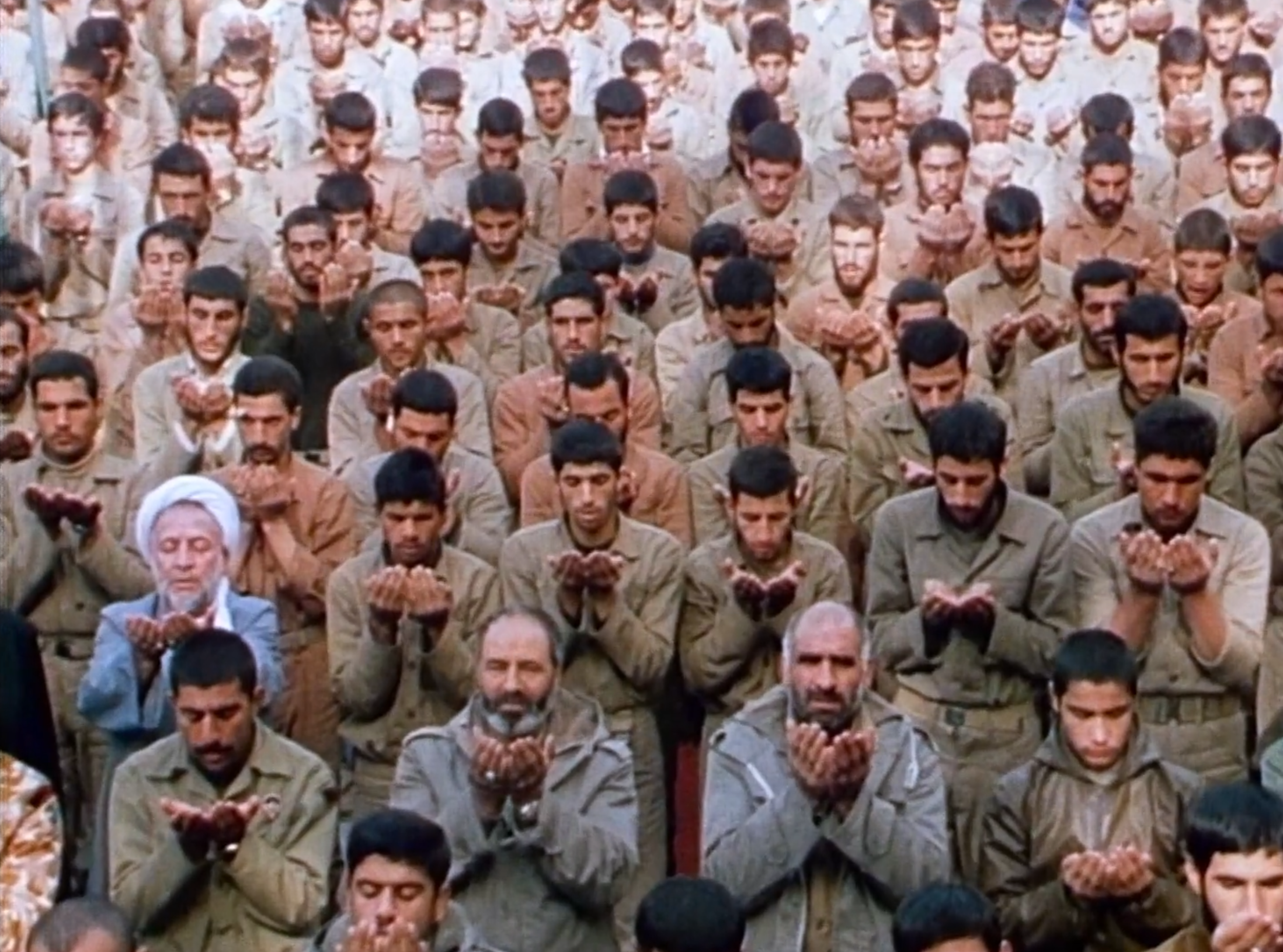
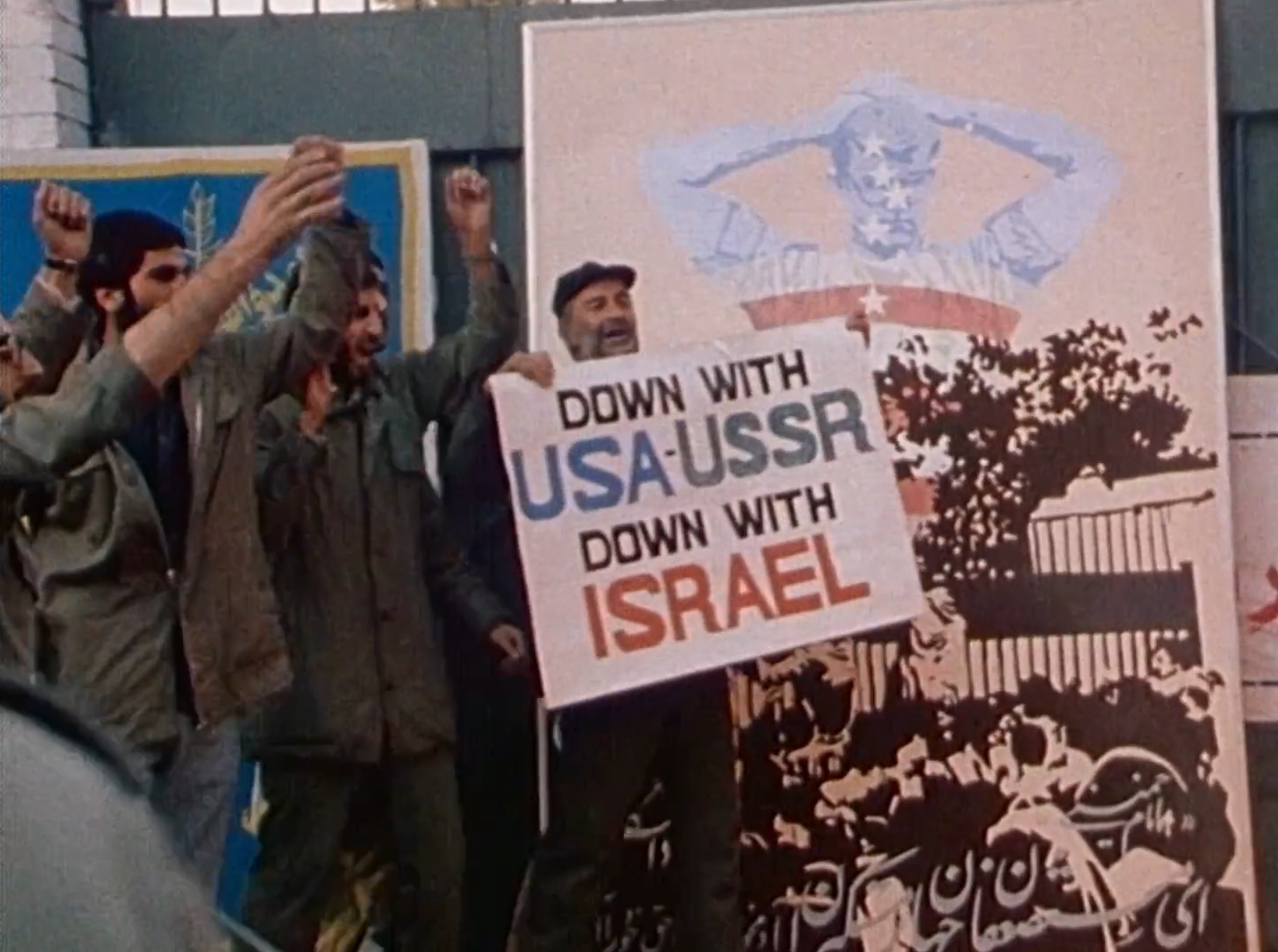
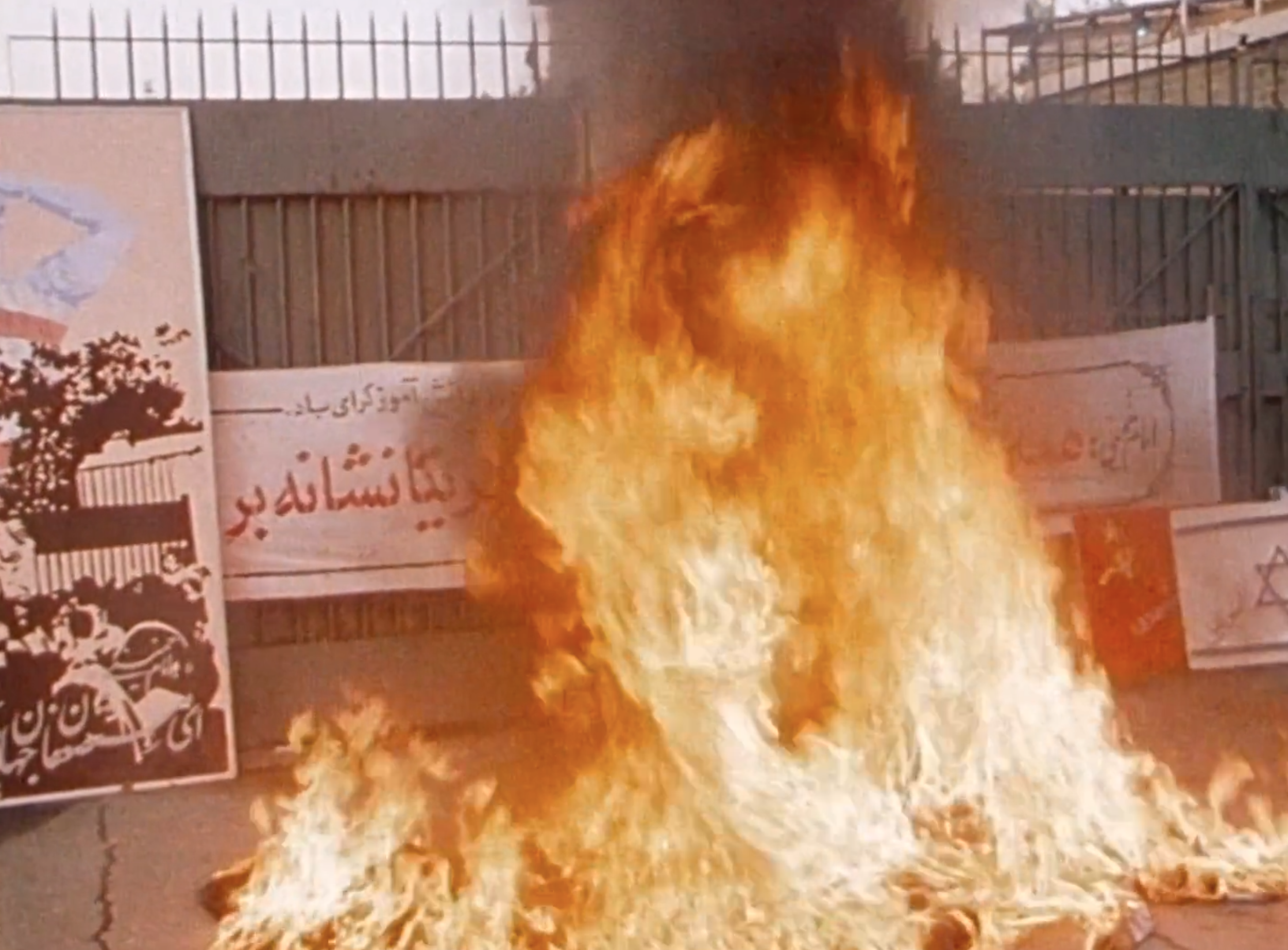
Between Revolutions’ Orientalist and racist imperialist rhetoric of the Global North casts doubt on every political behavior of Muslims. The minute 25 depicts hijabi women standing in line to cast their vote in the 1979 referendum that determined whether Iranians would say yes or no to the Islamic Republic of Iran. But the voice morphed over the images of hijabi women showing a victory sign, casts a dark gaze on them, and says, ‘In my small night there is fear of ruin. Listen, do you hear the howl of darkness?’ The hijabi women, or maybe their political behavior, are portrayed as the howl of darkness. It is footage after footage sliding over each other, serving imperialist tropes to turn Muslims, especially Shiʿi Muslims who have a long history of muqāwama, into figures of darkness. This is not mere ignorance and good intentions gone bad, and minute 26 is my evidence. The images of Iranian protesting at the wall of the US embassy in Tehran and burning the US flag accompany a song whose lyrics say, ‘there is a wall that there is nothing behind it and the sun will not rise from behind it now that you have brought dark clouds over it’. It seems, for Vlad Petri, the sun rises from the literal imperial territory, and Iranians protesting US imperialism have ruined the sunrise with the dark clouds of their revolution. I especially spotlight this because Vlad Petri has stated, ‘Being an Eastern European, I deal with these questions: where is East, where is West?’ and it seems Vlad Petri’s sun rises in the West or the US territories, to be exact. If this isn't imagining alongside imperialism, then what else could it be?
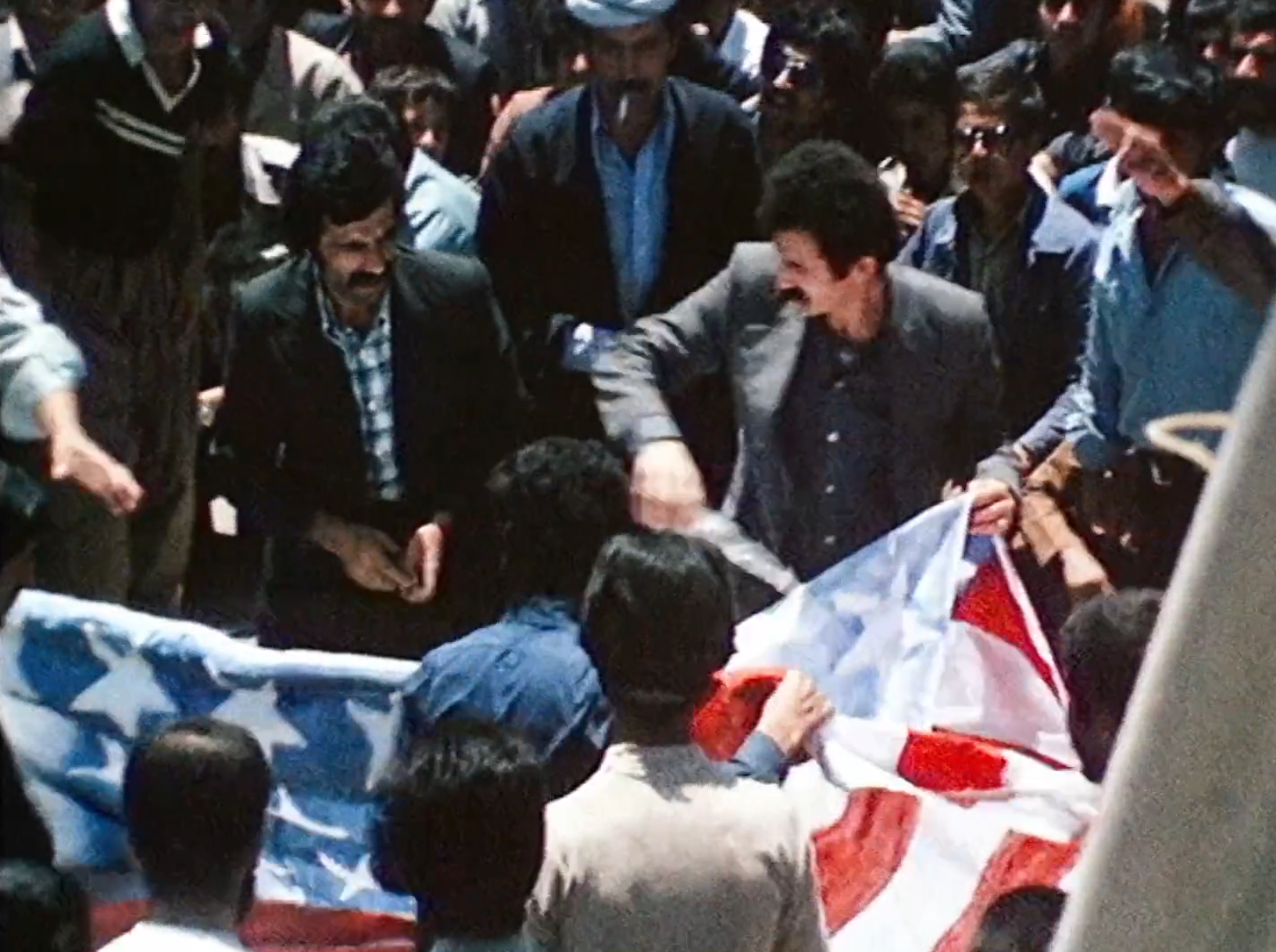
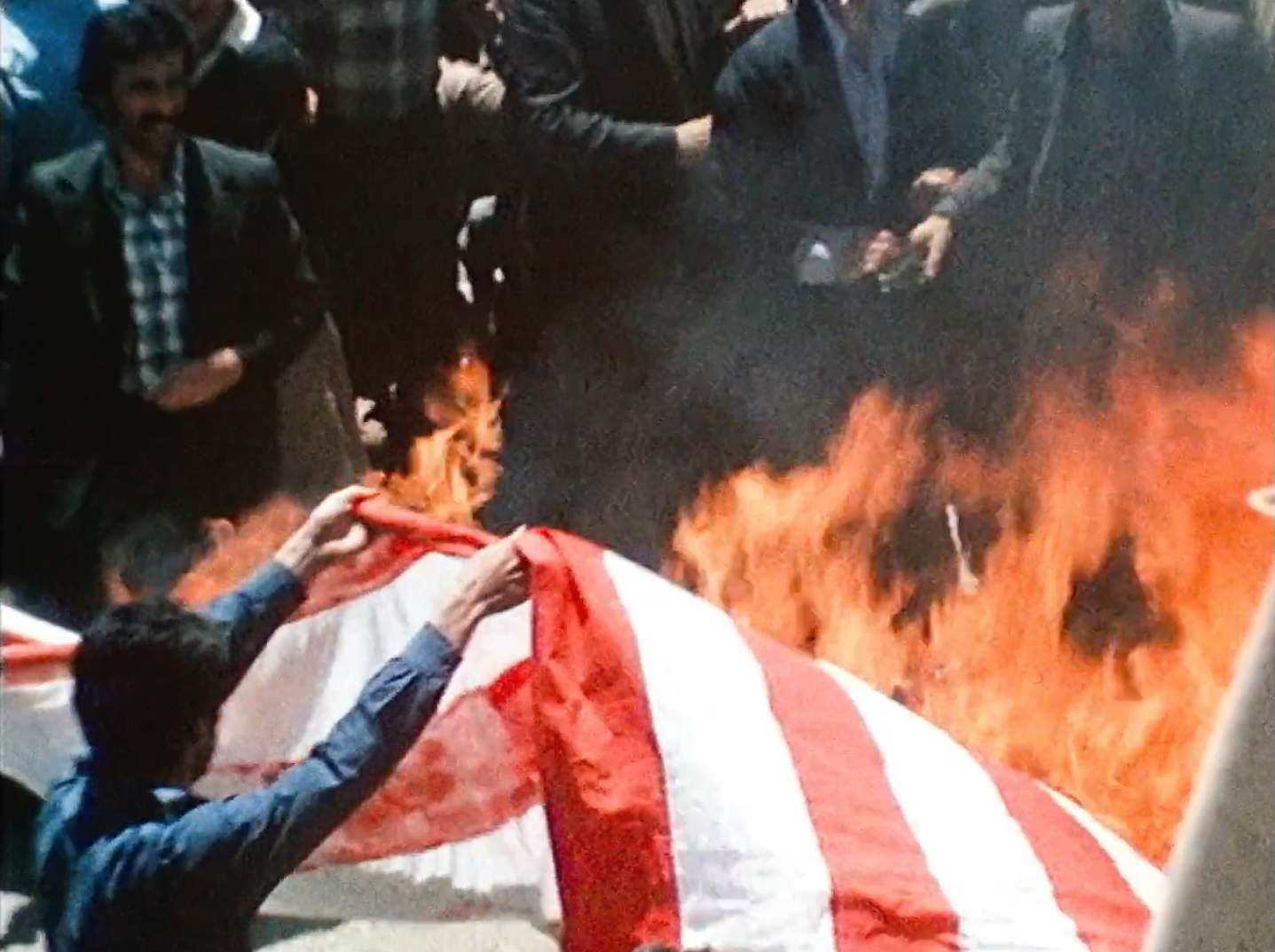
Islamophobia and imagining alongside empire are platforms for Between Revolution to speak of the hope transformed into despair of Maria and Zahra, who rightly wish for their most basic rights as women: individual sovereignty. However, patriarchy is smuggled into their desire for individual sovereignty through the astonishing prose of Lavinia Braniște, who turns father into the figure who teaches hope and revolution, and memories fade and become messy as he disappears (minute 39). It seems, for Vlad Petri, Zahra did not know or could not know hope and revolution without the teachings of the father figure. When Islamophobia becomes the cornerstone of reimagining pasts, then no doubt patriarchy somehow creeps in and is concealed in narration.
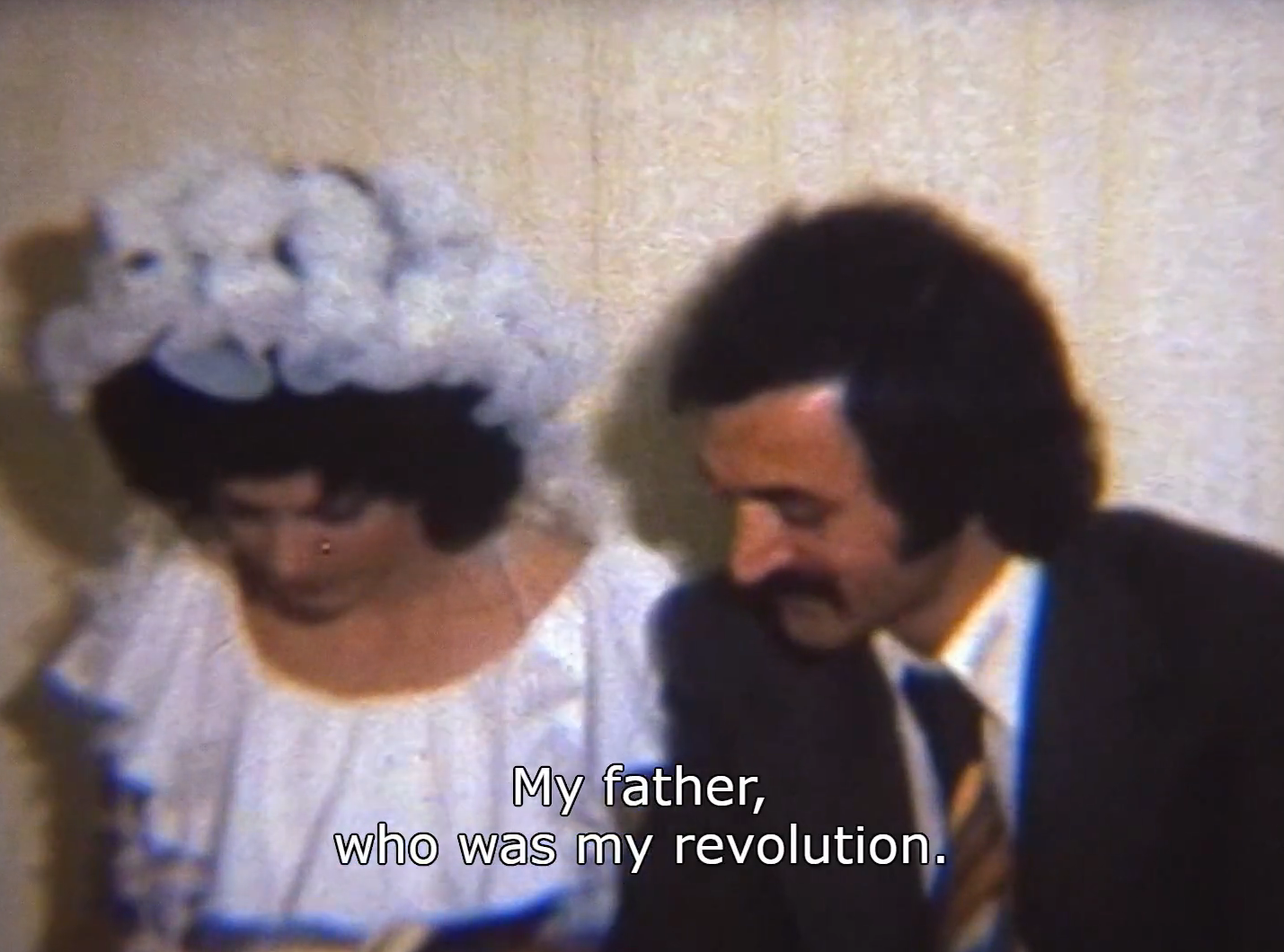
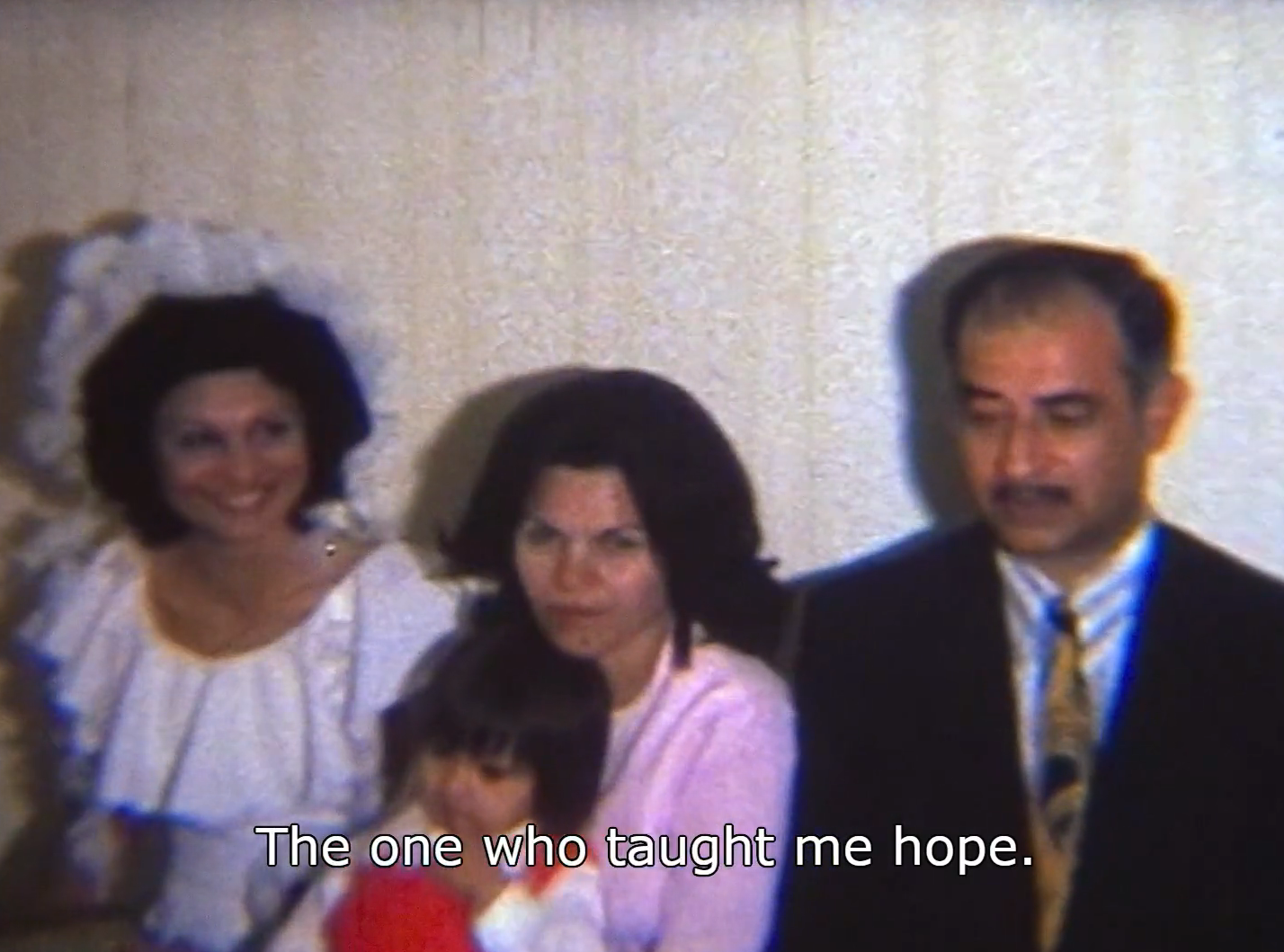
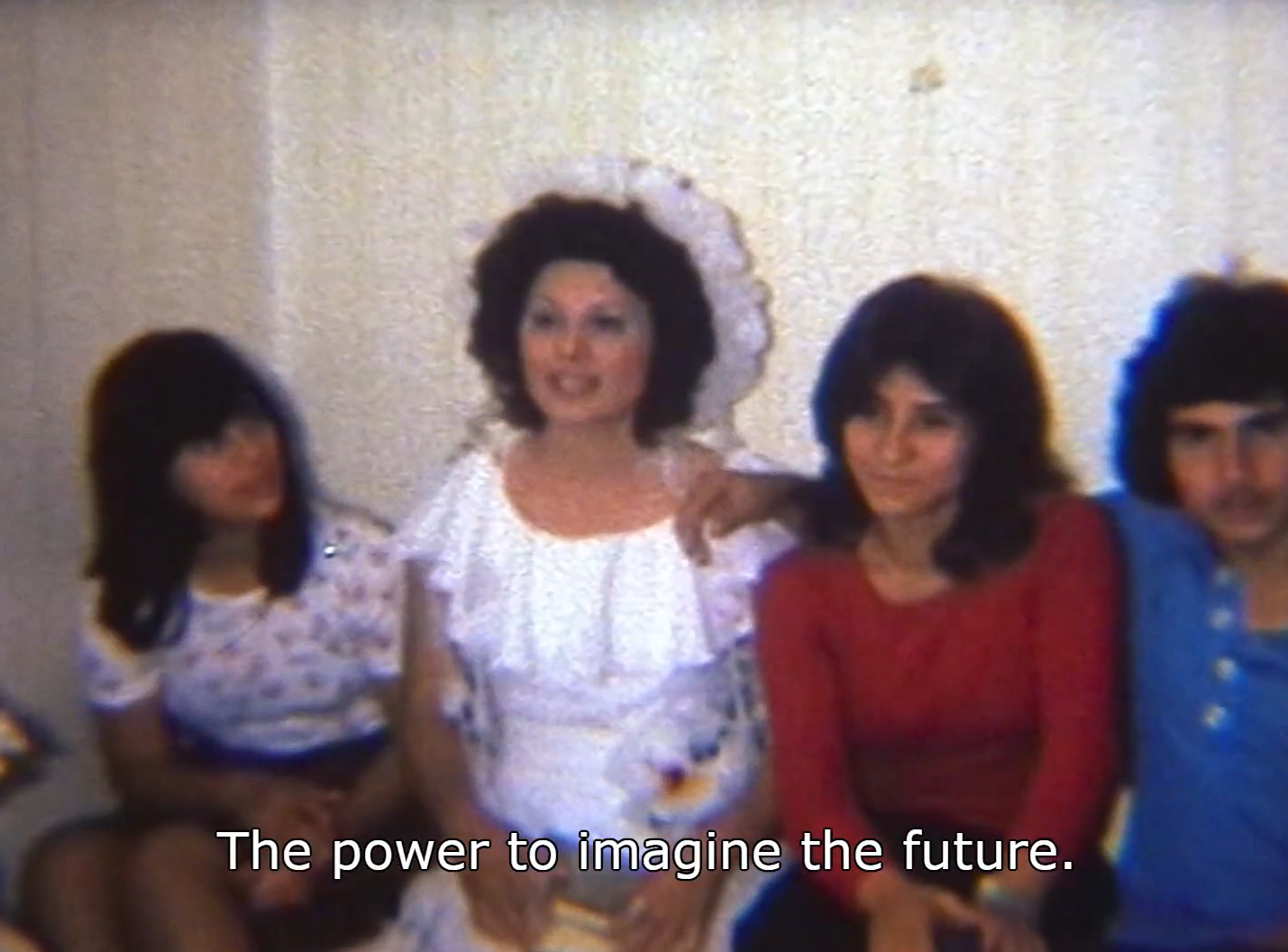
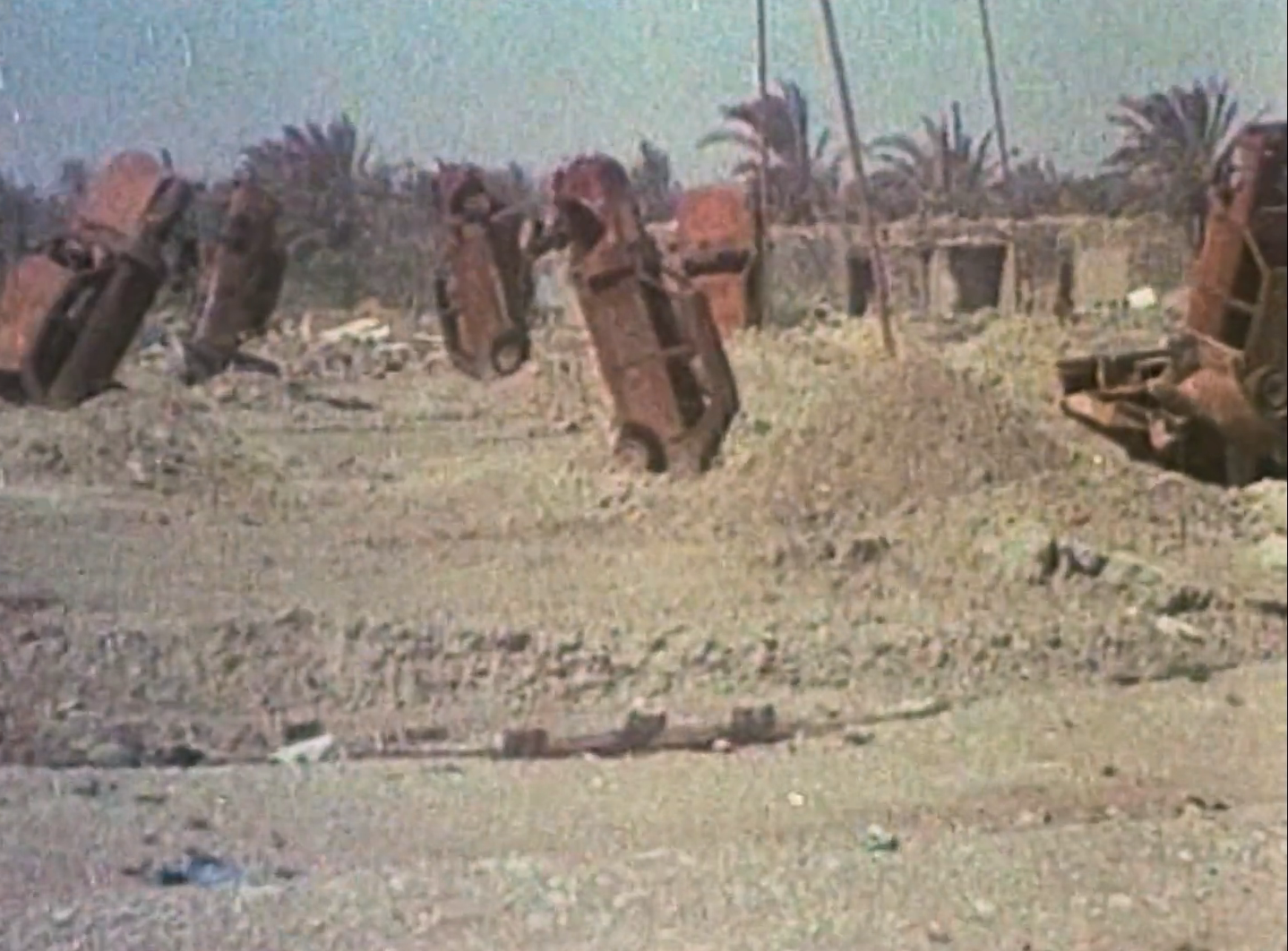
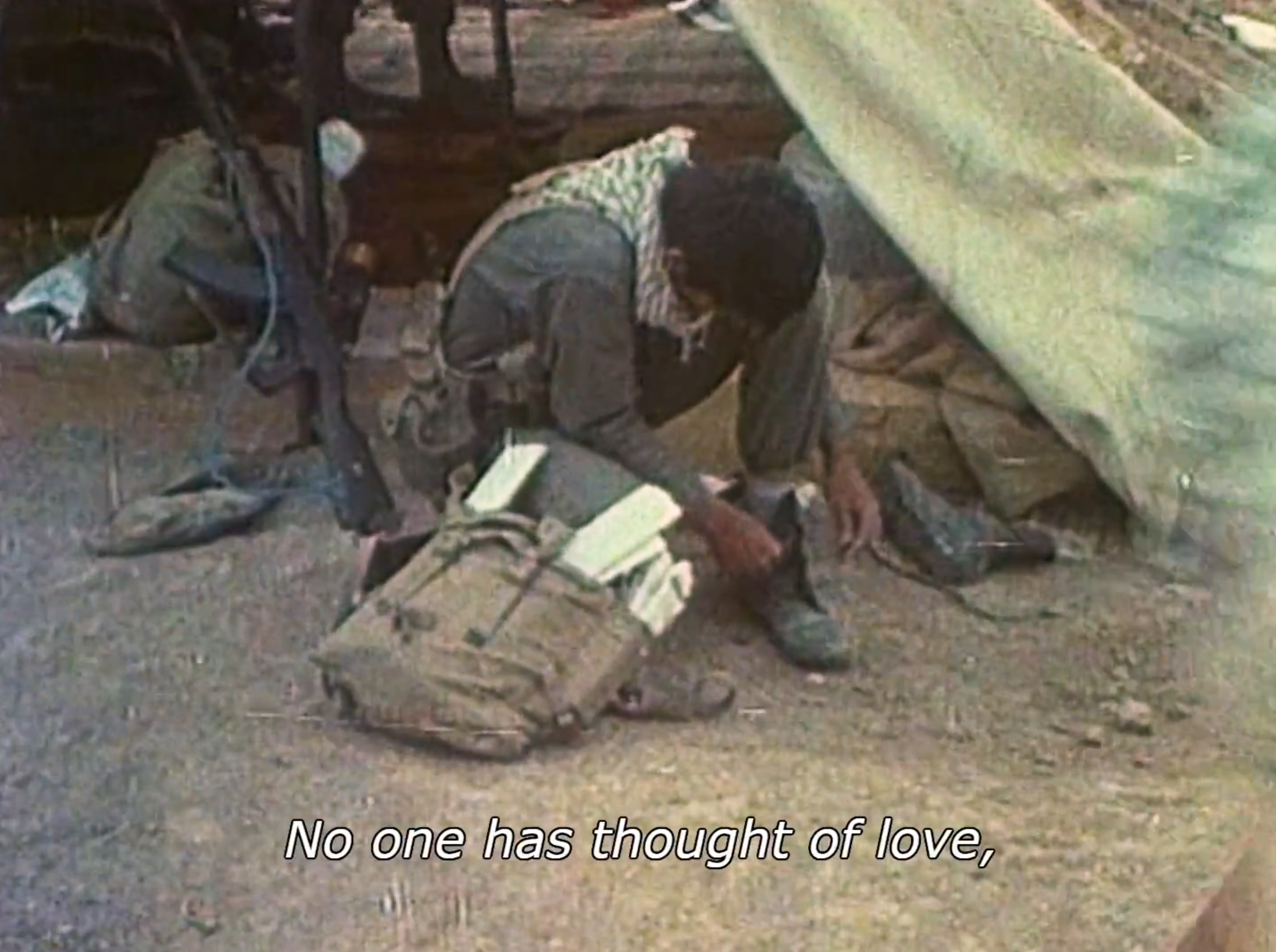
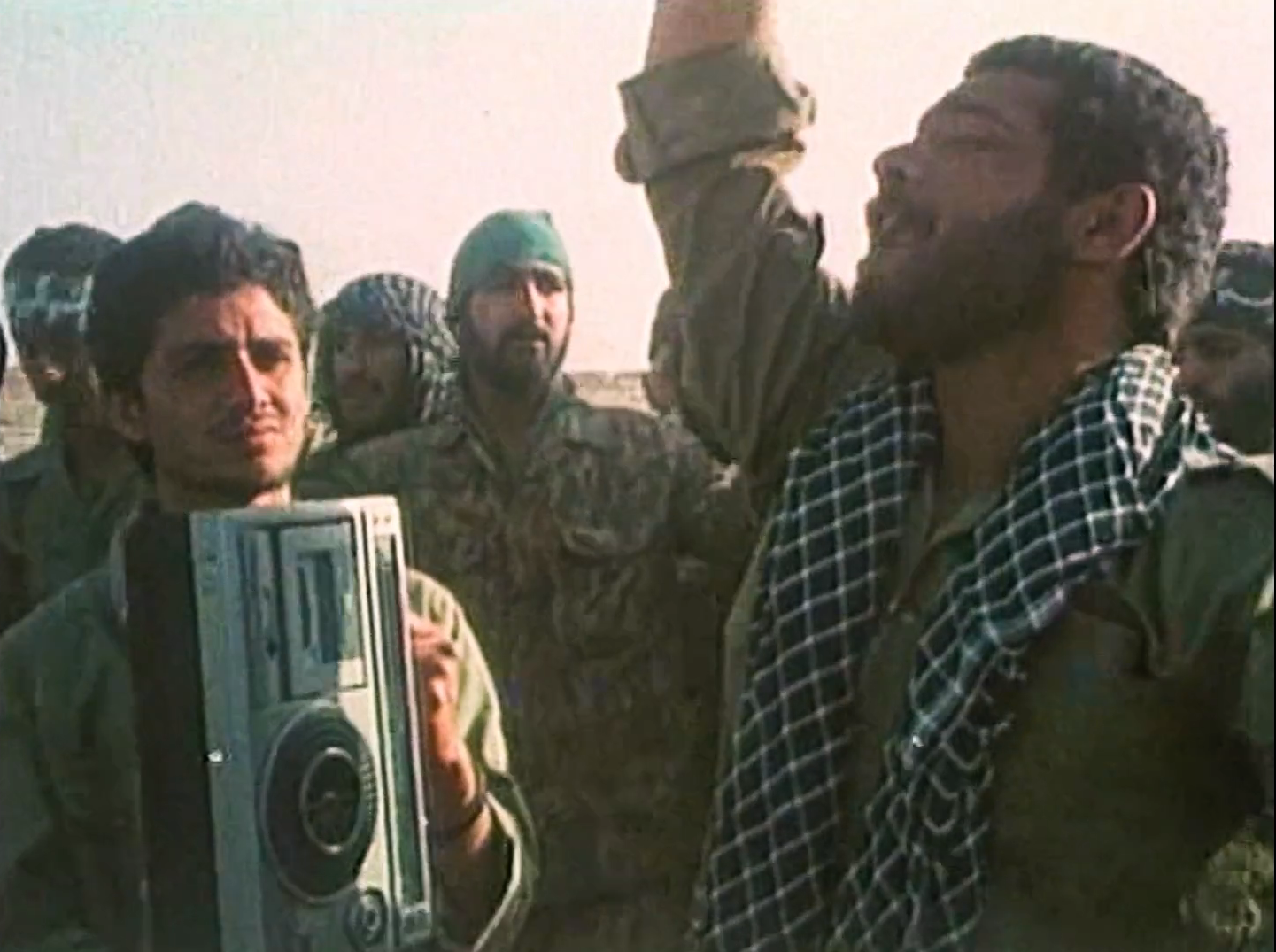
Now that Between Revolution is shown as the visual narrative of Islamophobia, imperialism, and patriarchal imaginary, I turn to its ahistoricality to make a case for its malicious intent. When Zahra speaks of her regrets for not listening to Maria (minute 39), who warned her of the Islamic Republic, Zahra’s voice animates the footage of the Iran-Iraq War (1980-1988), the burned cars sprouting from the earth beside burned palm trees, and volunteer combatants performing an Islamic ritual of lamenting a martyred sacred figure. Zahra’s voice animates that footage by saying ‘no one has thought of love,’ glossing over the fact that Iraq invaded Iran with the support of the US and European allies while Iran was in disarray, and it was ordinary civilians who volunteered to resist the invasion. If resistance, which has become the only way of existence for peoples of West Asia, is not love, and thinking about love, then what is it? Between Revolution, while portraying the burned cars in the background of volunteer combatants, fails to say that the footage is from the liberation of Khorramshahr, where Iraq killed 735 Iranians, including civilians, during the first three months of its invasion of Khorramshahr; then Iraq erected more than three thousand cars around the city of Khorramshahr to hinder the movements of Iranian resistance forces.
Between Revolution remains silent on history by turning history into individual memory, hope and despair, pushing a form of historical revisionism. Its ahistoricality and historical revisionism use poetry to undermine muqāwama, resistance, the concept that hope is made of in the landscape of war. Between Revolution is the tale of imperial imaginaries encroaching via co-option of feminism and velvety poetry, which undermines the concept of resistance in the name of hope and despair while we are witnesses to the genocide and erasure of Palestine.
Sources:
‘It’s Really What Is Going on Today’: Past and Present Collide in Moving Documentary ‘Between Revolutions,’ Charting the Uprisings in Iran and Romania, Christopher Vourlias, Variety, 12 June 2023, https://variety.com/2023/film/global/between-revolutions-iran-romania-1235640637/
Romanian-Iranian Cultural-Academic Relations during the Cold War, Andrei Popa, https://www.academia.edu/146023208/Romanian_Iranian_Cultural_Academic_Relations_during_the_Cold_War
The Shah’s petro-diplomacy with Ceausescu: Iran and Romania in the era of Détente. (CWIHP working papers 74). Woodrow Wilson International Center for Scholars, Alvandi, R. & Gheorghe, E., 5 June 2019, https://researchonline.lse.ac.uk/id/eprint/100977/
Fuel Bridge across the Middle East—Israel, Iran, and the Eilat-Ashkelon Oil Pipeline, Uri Bialer, Israel Studies, Fall 2007, https://www.jstor.org/stable/pdf/30245672.pdf
Israel embraced Romanian dictator’s support — knowing he was anti-Semitic, Eitay Mack, 3 December 2019, https://www.972mag.com/israel-romanian-dictator-anti-semitism/
The Ransom of the Jews: The Story of the Extraordinary Secret Bargain Between Romania and Israel, Radu Ioanid, https://www.bloomsbury.com/us/ransom-of-the-jews-9781538140758/
The sacralized politics of the Romanian Iron Guard, Politics, Religion & Ideology, Radu Ioanid, 10 August 2006, https://www.tandfonline.com/doi/abs/10.1080/1469076042000312203?casa_token=cAIimIskTQMAAAAA:Z61_nICa1Qi2ovsFb0B7eofIWE80KwKcP1et3mkNk5k9M65IX1xBP239fEo8XeNKwl2axEwvw6I
Investigating the 1981 Massacre in Iran: On the Law-Constituting Force of Violence, 2024, Shahin Nasiri & Leila Faghfouri Azar, https://www.tandfonline.com/doi/pdf/10.1080/14623528.2022.2105027
Între revoluții Between Revolutions, https://www.berlinale.de/en/2023/programme/202306461.html
روایت مقاومت و آزادسازی خرمشهر با نگاهی به آمار شهدا https://d-mag.ir/p15576/